
The Role of EMC Testing in North American Product Certification
Why EMC testing matters when certifying electrical and lighting products in North America, and how it fits alongside safety certification for your own products.
What exactly is EMC testing, and why should manufacturers care?
Electromagnetic Compatibility (EMC) testing stands as a crucial gateway for electronic products entering the North American market. At its core, EMC testing ensures that your device can function as intended without creating electromagnetic interference (EMI) that could disrupt other nearby electronic equipment, while also being immune to interference from other devices. Think of it as establishing good electronic citizenship – your product needs to play nice with others in an increasingly connected world.
For manufacturers, EMC testing is not just another regulatory hurdle; it's a fundamental aspect of product development that can make or break your market success. Non-compliant products face recalls, legal penalties, and damaged brand reputation. Moreover, with the proliferation of wireless devices and sensitive electronic equipment in homes and businesses, the importance of EMC compliance has never been more critical.
How does EMC testing protect consumers and other devices?
Imagine a scenario where your car's electronic brake system malfunctions because a nearby radio transmitter interferes with its controls, or where a medical device in a hospital stops working correctly due to interference from a poorly designed electronic device. These aren't theoretical concerns – they represent real risks that EMC testing helps prevent.
EMC testing protects consumers by ensuring that electronic products can coexist safely in our technology-rich environment. In practical terms, it prevents situations like:
- Wireless routers losing connection when someone uses a microwave
- Medical equipment displaying incorrect readings due to cellular phone interference
- Industrial equipment malfunctioning because of nearby radio transmitters
- Vehicle electronic systems experiencing glitches from external electromagnetic sources
These protections are particularly crucial in environments where multiple electronic devices operate simultaneously, such as hospitals, industrial facilities, and modern homes. By ensuring devices meet EMC standards, manufacturers contribute to a safer, more reliable electronic ecosystem.
Which regulatory bodies oversee EMC compliance in North America?
In North America, several key regulatory bodies govern EMC compliance. The Federal Communications Commission (FCC) leads the charge in the United States, primarily through Part 15 of its regulations for most electronic devices. These rules set specific limits on both intentional and unintentional electromagnetic emissions.
North of the border, Innovation, Science and Economic Development Canada (ISED, formerly Industry Canada) enforces similar requirements through its ICES (Interference-Causing Equipment Standard) series of standards. While these organizations maintain separate requirements, they work together to harmonize standards where possible.
Other important organizations involved in EMC compliance include:
- American National Standards Institute (ANSI)
- Underwriters Laboratories (UL)
- CSA Group (formerly Canadian Standards Association)
- Military standards (MIL-STD) for defense-related products
These bodies collaborate to develop and maintain testing standards that address various aspects of electromagnetic compatibility, including:
- Conducted emissions
- Radiated emissions
- Immunity to external interference
- Specific requirements for different product categories
What specific tests are performed during EMC certification?
EMC certification involves a comprehensive suite of tests designed to evaluate both a product's emissions and its immunity to external interference. The two main categories of testing are:
Emissions Testing:
- Conducted emissions (CE): Measures electromagnetic energy traveling through power and signal lines
- Radiated emissions (RE): Evaluates electromagnetic fields radiating from the product
- Harmonic emissions: Analyzes distortions in power consumption
- Voltage fluctuations and flicker: Examines impact on power supply stability
Immunity Testing:
- Electrostatic discharge (ESD): Simulates static electricity exposure
- Radiated immunity: Tests resistance to electromagnetic fields
- Electrical fast transients: Evaluates response to power line disturbances
- Surge immunity: Assesses protection against power surges
- Conducted immunity: Checks resilience to conducted disturbances
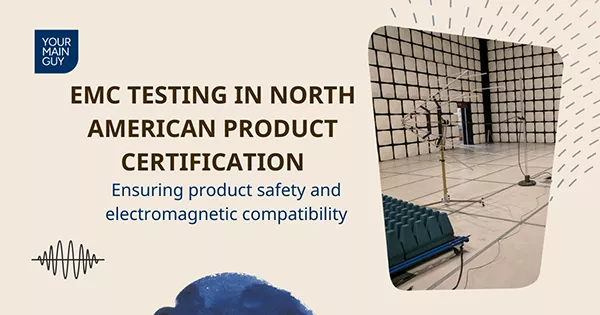
Each test follows specific procedures and must meet predetermined limits. For instance, during radiated emissions testing, the product operates in a specialized chamber while sensitive antennas measure electromagnetic emissions at various frequencies and distances. The results must fall within acceptable limits defined by the relevant standards.
When should manufacturers start thinking about EMC compliance?
EMC compliance should be a consideration from the earliest stages of product design, not an afterthought. Early planning helps avoid costly redesigns and delays in bringing products to market. The ideal approach follows these principles:
During Initial Design:
- Incorporate EMC best practices in circuit design
- Consider component selection and placement
- Plan proper shielding and grounding schemes
- Design PCB layouts with EMC in mind
Pre-Production Phase:
- Conduct preliminary testing with prototypes
- Identify potential issues early
- Make necessary design adjustments
- Estimate compliance testing costs
Manufacturing Planning:
- Ensure consistent production methods
- Establish quality control procedures
- Maintain documentation of EMC-critical aspects
- Train personnel on EMC-sensitive processes
Early consideration of EMC requirements typically results in lower overall costs and faster time to market, as addressing issues during design is significantly less expensive than making changes to finished products.
How does EMC certification impact market access?
EMC certification directly affects a manufacturer's ability to sell products in North America. Without proper certification, products cannot legally enter the market, and non-compliant products face:
- Immediate sales restrictions
- Mandatory recalls
- Substantial fines
- Potential legal liability
- Damage to brand reputation
However, proper EMC certification offers significant benefits:
Market Access:
- Legal permission to sell in North American markets
- Ability to bid on government contracts
- Access to restricted markets (medical, industrial, etc.)
- Simplified customs clearance
Competitive Advantages:
- Enhanced product reliability
- Reduced warranty claims
- Improved customer confidence
- Marketing differentiation
The certification process also helps manufacturers:
- Identify potential product issues early
- Improve overall product quality
- Develop better design practices
- Build stronger relationships with regulatory bodies
What are the practical steps to achieve EMC compliance?
Achieving EMC compliance requires a systematic approach:
- Planning Phase:
- Review applicable standards
- Select qualified testing laboratory
- Create compliance timeline
- Budget for testing and potential modifications
- Pre-Testing Preparation:
- Gather required documentation
- Prepare product samples
- Develop test plans
- Train relevant personnel
- Testing Process:
- Conduct preliminary testing
- Address any identified issues
- Perform formal certification testing
- Document all test results
- Post-Testing Activities:
- Complete necessary paperwork
- Submit results to regulatory bodies
- Maintain compliance records
- Implement ongoing monitoring
Here are the Common pitfalls to avoid:
- Inadequate documentation
- Insufficient test preparation
- Poor sample selection
- Unrealistic timelines
Success typically requires the following:
- Experienced EMC engineers
- Proper test equipment
- Thorough documentation
- Understanding of standards
- Commitment to quality
By following these steps and working with qualified professionals, manufacturers can navigate the EMC certification process effectively and ensure their products meet all necessary requirements for the North American market.
.webp)